Vintage Medical Instruments
Bone saws, phrenology busts, and the grim evolution of historical surgery.
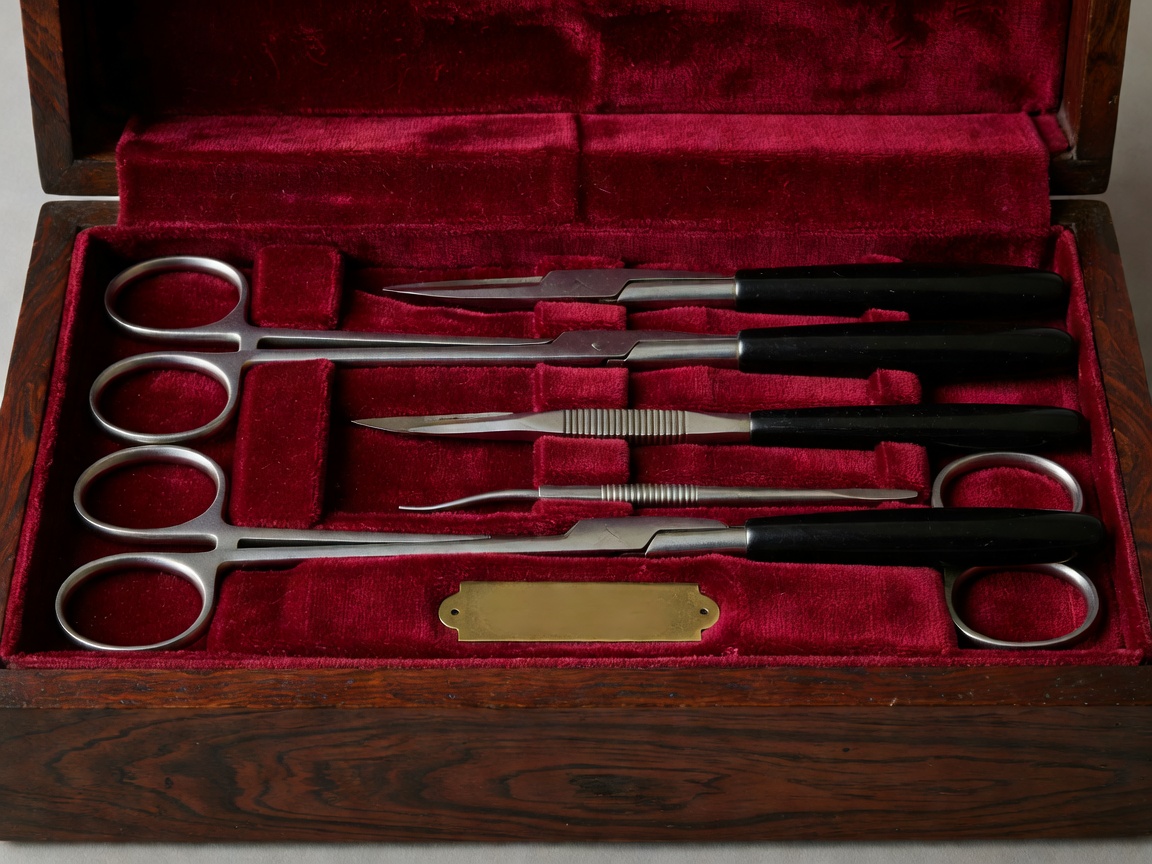
The collection of vintage medical and surgical instruments is not merely an exercise in the macabre; it is an intimate study of human progress. To hold an amputation saw from the American Civil War era or a brass carbolic acid sprayer from the dawn of antiseptic surgery is to touch the very edge of historical survival. Collectors in this niche are part historians, part curators, preserving the tangible evidence of how our understanding of the human body has evolved.
The History and Evolution of Design
Before the widespread understanding of germ theory in the late 19th century, surgical instruments were designed primarily for function and aesthetics rather than sterility. During the 18th and early 19th centuries, it was common for surgical tools to feature handles made from porous, elegant materials such as carved ivory, ebony, or bone. These materials, while beautiful and indicative of the surgeon's wealth and status, were notorious harbors for bacteria.
The transition into the late Victorian era brought about a monumental shift in medical design. Following Joseph Lister’s promotion of antiseptic surgery, the need for instruments that could be sterilized by boiling became paramount. This led to the creation of instruments forged entirely from single pieces of stainless steel or plated brass, stripping away the ornate handles in favor of smooth, easy-to-clean surfaces. For the collector, this distinct transition line provides an immediate timeline for dating artifacts.
Key Categories and Variations
The scope of medical antiquities is vast, leading many collectors to specialize in specific medical disciplines or eras. Some of the most highly sought-after categories include:
- Surgical Amputation Kits: Often housed in mahogany or walnut cases lined with crushed velvet. These kits typically contain tourniquets, various surgical knives, and the iconic amputation saw. Complete, matching sets from the 1850s to 1860s are among the most prized pieces in any collection.
- Diagnostic Tools: Early monaural stethoscopes, wooden or brass devices that resemble small trumpets, trace the origins of internal acoustic diagnostics. Phrenology busts—ceramic heads mapped with human traits—serve as fascinating relics of pseudo-scientific diagnosis.
- Apothecary and Pharmaceutical Antiques: This sub-category includes hand-blown glass medicine bottles, porcelain apothecary jars with gilded labels, and precision brass scales used for measuring out botanical remedies and early chemical compounds.
- Bloodletting Devices: Fleams, spring-loaded scarificators, and ornate glass cupping sets represent centuries of humoral theory, where bleeding was considered the cure for countless ailments.
Condition, Grading, and Authentication
As with all historical artifacts, condition is a primary driver of desirability. However, in medical antiques, "pristine" condition is exceptionally rare given the functional nature of the objects. Collectors generally look for:
- Completeness: A surgical set missing a key instrument (such as the main capital saw) will see a significant reduction in interest compared to a full suite. Empty slots in a velvet-lined case are a common issue.
- Originality: Matching maker's marks across all instruments in a set confirm it was assembled as a unit, rather than pieced together by a dealer later on. Prominent makers like Tiemann, Weiss, or Charriere add significant historical weight.
- Patina vs. Damage: While minor surface oxidation (patina) is expected and sometimes desired as proof of age, active rust or pitting on steel blades requires intervention. Cracks in ivory handles or split wood on cases are common but should be stabilized.
Preservation and Ethical Considerations
Preserving medical antiques requires strict control of environmental factors. Wood and leather cases are susceptible to drastic changes in humidity, which can cause warping or cracking. Metal instruments should be kept in stable, dry environments and occasionally treated with micro-crystalline wax to prevent further oxidation.
Additionally, collectors often navigate the ethical nuances of their hobby. While tools and instruments are universally traded, the collection of anatomical specimens, osteology (bones), and certain historical medicinal preparations (which may contain controlled or toxic substances) require strict adherence to local laws and modern ethical standards regarding human remains.
The Market and Community
The community surrounding medical antiquities is highly active, anchored by historical societies, specialized auction houses, and academic historians. The market has seen steady interest, particularly as medical professionals and institutions seek pieces for display. A complete, mid-19th-century amputation kit with provenance can command substantial attention at auction, while smaller items like individual brass scarificators serve as accessible entry points for novice collectors.
Ultimately, collecting vintage medical instruments is an act of acknowledging our vulnerable past. It is a tribute to the resilience of the human body and the relentless, sometimes brutal, drive of human ingenuity to heal it.