Historical Hair Art
Mourning wreaths, watch fobs, and the forgotten art of weaving human hair.
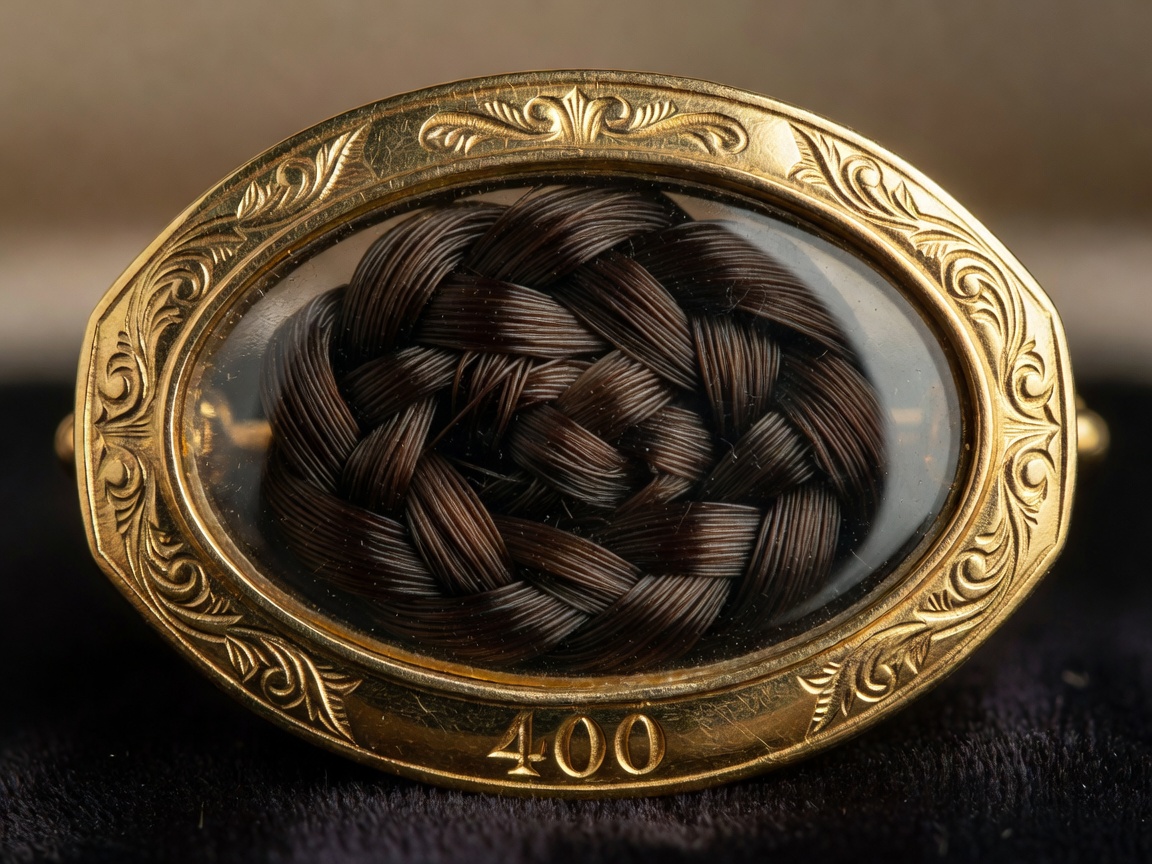
To the modern observer, the idea of wearing jewelry made from a deceased relative's hair may seem macabre, even unsettling. Yet, in the 19th century, it was an act of profound love and remembrance. Victorian hair art represents one of the most uniquely sentimental chapters in the history of decorative arts. Collectors of these intricate, fragile pieces are preserving not just physical objects, but the frozen emotional landscapes of a society deeply preoccupied with mortality and memory.
The Cultural Context of Mourning
The popularization of hair art is largely attributed to Queen Victoria, who fell into a deep and highly visible period of mourning following the death of her husband, Prince Albert, in 1861. As she donned black clothing and wore a locket containing Albert’s hair, the general public eagerly followed suit. However, the tradition of hair work predates this era, serving both as mourning artifacts and as tokens of affection between living lovers or family members.
Because human hair does not naturally decay like flesh or bone, it was viewed as the perfect, incorruptible physical remnant of a loved one. When photography was either unavailable or prohibitively expensive, a lock of hair was often the only tangible piece of a person that could be carried into the future.
Styles and Techniques
Creating hair art was an exacting, painstaking craft that required immense patience. It was practiced both by professional artisans and by women in the home, functioning as a popular parlor craft. The works generally fall into a few distinct categories:
- Palette Work: In this technique, hair was laid flat, glued to a surface (usually vellum or ivory), and then cut into intricate shapes, often depicting weeping willows, urns, or floral motifs. These miniature scenes were then sealed behind glass in brooches, pendants, or rings.
- Table Work (Weaving): This involved braiding long strands of hair over a specialized table equipped with weights and bobbins, similar to lacemaking. The resulting sturdy, woven tubes of hair were used to fashion watch fobs, bracelets, and necklaces, often finished with engraved gold or pinchbeck fittings.
- Hair Wreaths: Often large enough to be framed and hung in the parlor, these elaborate three-dimensional wreaths were constructed by wrapping hair around thin wires to form leaves and flower petals. They were frequently cumulative, with families adding new floral additions from different relatives over several generations.
Condition and Preservation Challenges
The collection of hair art requires extreme care. As an organic material, hair is highly susceptible to environmental damage. Moths and other insects are known to attack exposed hair wreaths, while fluctuations in humidity can cause the adhesives in palette work to fail, leading to the disintegration of the intricate designs.
Collectors evaluate pieces based on the tightness of the weave, the clarity of the glass protecting the piece, and the condition of the metalwork. A common issue with palette work is the buildup of condensation inside the glass casing, which can cause mold to grow on the delicate vellum backing. Direct sunlight is also a primary enemy, as it will bleach the natural pigments of the hair over time, turning deep browns and blacks into dull, uniform grays.
Collecting Trends and Community
The community of hair art collectors is small but deeply passionate, often overlapping with collectors of antique mourning attire, early photography (such as post-mortem daguerreotypes), and Victorian social history. Provenance adds immense value to these items; a woven bracelet accompanied by a contemporary letter or photograph identifying the original owner is considered highly desirable.
While some find the physical reality of the medium off-putting, collectors view hair art as the ultimate expression of human connection. Each braided watch fob and framed floral wreath is a testament to someone who was loved, mourned, and meticulously immortalized by hand.